 AL NOOR BUILDING - Office No: 506 - Damascus Street - Al Qusais -Al Qusais Ind. Third - Dubai, UAE
 +971 429 49 139
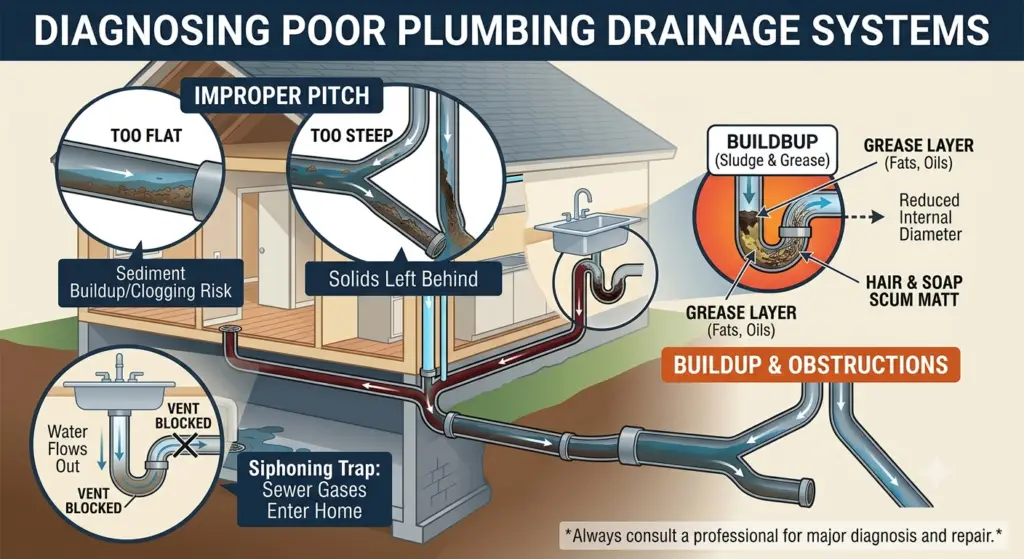
Out of sight, out of mind. That is how most people treat their plumbing. As long as the water disappears down the sink or shower drain, we assume everything is working perfectly.
But beneath your floors and behind your walls, a poorly designed or badly maintained drainage system could be brewing a major disaster. A failing drainage system doesn’t just cause the occasional annoying clog—it can actively threaten your property’s structure, your wallet, and your family’s health.
Here is a look at what causes poor drainage, the warning signs you shouldn’t ignore, and the true cost of letting it go unchecked.
The Warning Signs of a Failing Drainage System
A drainage system rarely fails overnight. It usually sends out several clear warning signals. Recognizing them early can save you thousands in major repairs.
- Slow Drains Across Multiple Fixtures: If just one sink is draining slowly, it’s a localized clog. If your shower, kitchen sink, and laundry line are all sluggish, you are looking at a systemic mainline drainage issue.
- Frequent Gurgling Noises: When water fights its way past a blockage or struggles due to poor venting, it traps air. That distinct glug-glug sound from your pipes is a cry for help.
- Foul Odors: A properly functioning drain uses a P-trap (a curved section of pipe) to hold a small pool of water, which blocks sewer gases from entering your home. If you constantly smell sewage, your traps are either drying out, siphoning due to poor pressure, or venting incorrectly.
- Frequent Backups: If using the washing machine causes water to bubble up in your shower stall, your drainage lines are severely compromised.
What Causes Poor Plumbing Drainage?
Poor drainage usually boils down to three main culprits: bad installation design, age, or improper usage.
Debris accumulation inside a standard P-trap. Source: Elmer’s Home Services
1. Incorrect Pipe Slope (Pitch)
Drainage systems rely entirely on gravity to move waste. If a pipe is too flat, water and solid waste will pool, leading to immediate clogs. Surprisingly, if a pipe is sloped too steeply, the water will rush ahead too fast, leaving the solid waste sitting behind in the pipe to dry up and block the line. The industry standard is typically a 1/4-inch drop per foot for standard lateral lines.
2. Improper Venting
Every drainage system needs a breathing mechanism. Plumbing vents extend up through your roof to let air into the system. Without this airflow, rushing water creates a vacuum—much like putting your finger over the top of a straw. This vacuum slows down the drainage and can suck the water right out of your P-traps, letting sewer gases flood your living space.
3. Sludge and Material Buildup
Over time, pouring cooking grease, fats, and oils down the kitchen sink creates a sticky lining inside your pipes. Hair, soap scum, and flushable wipes (which are never actually flushable) catch on this sticky residue, narrowing the pipe’s internal diameter until the flow stops completely.
The True Cost of Neglect
Ignoring a poor drainage system is a gamble you will eventually lose. The consequences go far beyond a messy bathroom floor:
Structural Damage: Persistent leaks or backups from drainage lines can warp wooden framing, rot subfloors, and erode the soil underneath your concrete slab foundation, leading to incredibly expensive structural cracks.
Health Risks: Stagnant water and sewer backups introduce harmful bacteria, pathogens, and black mold growth into your home environment. Mold can trigger respiratory issues and allergies within just 24 to 48 hours of water exposure.
How to Protect Your Home
If you suspect your home has poor drainage, don’t rely purely on chemical drain cleaners. These harsh chemicals generate heat that can warp PVC pipes or corrode older cast-iron lines, creating even bigger leaks.
Instead, opt for preventative care. Use mesh drain strainers to catch hair and food particles, never pour grease down the sink, and have a licensed plumber perform a camera inspection if you notice systemic slow drains. Taking care of your drainage system now ensures your home stays safe, dry, and healthy for years to come.